

A reflection of my time in the United States

As the news of the executive order on H-1B visas broke a few days ago, as a former H-1B visa holder, I reflected on why I left the US almost two years ago. This post is a reflection of my time spent in the US: As a dependent of an H-1B visa holder (H4), as an international student (F1), and then as a professional (H-1B).
First Contact
A little history (and an interesting anecdote): My dad was also a H1B holder in the IT industry. When I was 8 years old, we moved to Fremont, California from New Delhi, India in the spring of 1992. We returned shortly after in the summer of 1993. My mom, sister and I were on a H4 visa as his dependents at the time.
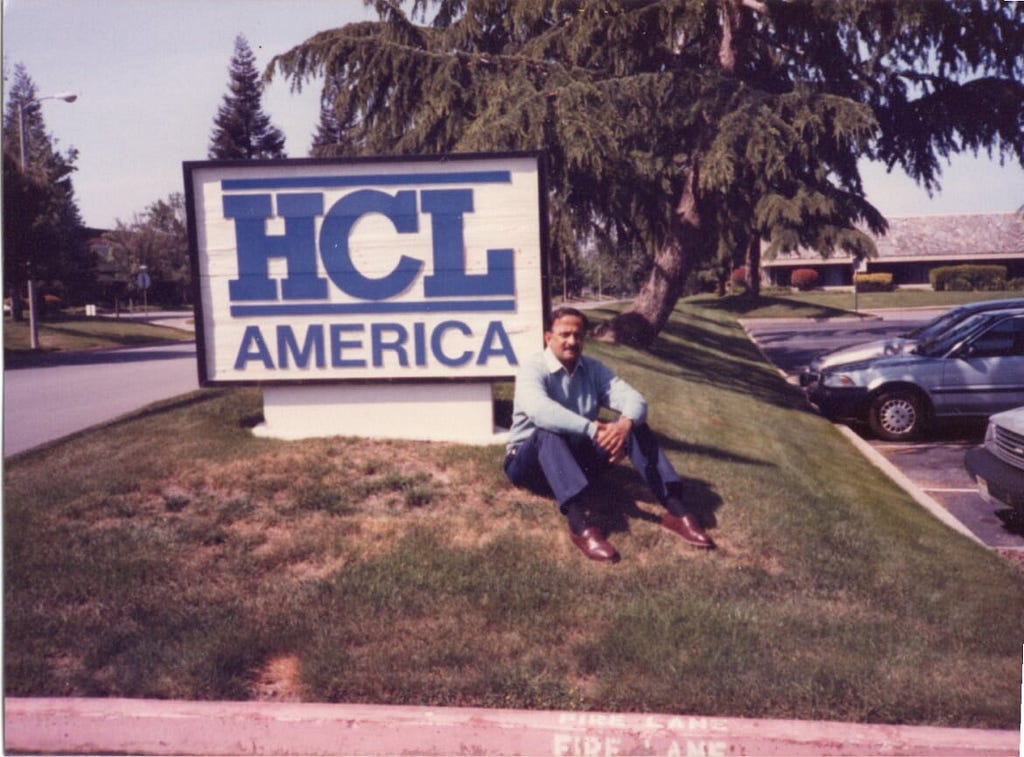
In that relatively short time, my sister and I went to public school in Fremont, we made friends, and traveled the country with my parents (California, Nevada, Michigan and New York).

Even at the age of 8, it felt like this move abroad had dramatically increased the size of the world in my mind. Moving to a new country, to a new home, going to a new school, meeting people who looked very different from me, and having a million other new experiences felt daunting at times, but it mostly felt like an adventure.
That year-and-a-half felt both infinitely long, and fleetingly short. The memories are etched in my mind in rich detail.
And then, just when it felt like we were starting to find our rhythm, we left and moved back to India. The transition back to the Indian school system was gruelingly difficult. For starters, the K1–8 curriculum in the US is substantially easier than the equivalent curriculum in India. While this made the transition from India to the US extremely easy, the transition back was a nightmare, because I had missed the entire Indian grade 3 curriculum, and was playing catch-up through most of grade 4 and 5.
I also had to re-learn reading and writing Hindi. Almost 2 years of no practice reading and writing it at that age, meant I had forgotten it. On top of catching up in general, having to re-learn a language was a recipe for months of tear-filled evenings and after-school work.
For my sister in Grade 8, this transition was even harder.
Returning for Graduate School
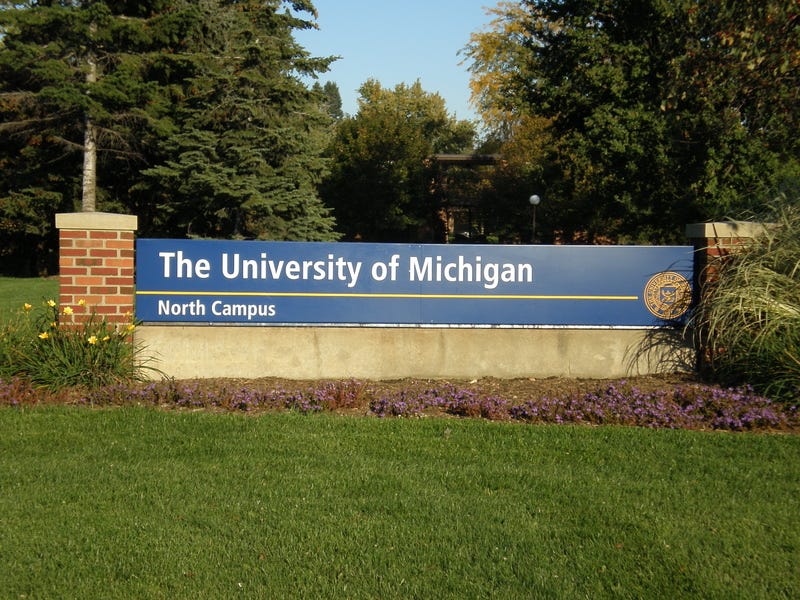
In 2006, I arrived back in the US after 13 years, on an F1 (student) visa to pursue a Masters Degree in Electrical Engineering at the University of Michigan, Ann Arbor.
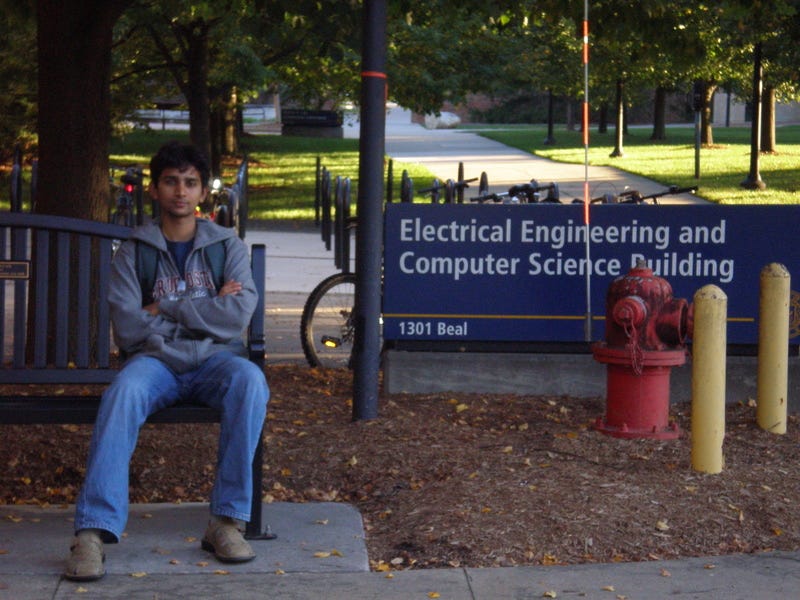
Tuition fees as an international student at the University of Michigan weren’t cheap: $32,000 a year. While I did have admission offers from 3 other US universities, none of them were substantially cheaper. With Michigan being a top school, I wanted to challenge myself by studying with some of the brightest students from around the world.
And so the choice was made.
My father paid for my first semester through a bank loan with our house as guaranty. My second semester was paid for with a private loan in the US, for which I had a US citizen co-signer, an ex-colleague of my dad (to whom I will forever be grateful).
When the house your parents own is on the line, AND you’re on the hook yourself for the largest amount of money you’ve ever owed anyone, it lights a fire under you. I wasn’t even sure where the tuition money for the third semester was going to come from.
Also, while the bank loan took care of tuition expenses, I was on my own for living expenses, so I took on the full 20 hours of work a week that international students are allowed, to pay for my rent, groceries, utilities etc.
To meet the 30 credit requirement for graduation, I took 12 credits my first semester, and 17 (SEVENTEEN) credits my second semester. In retrospect, the winter of 2007 was a time where I experienced the lowest of lows, and the most exhilarating highs.
Finding a Job
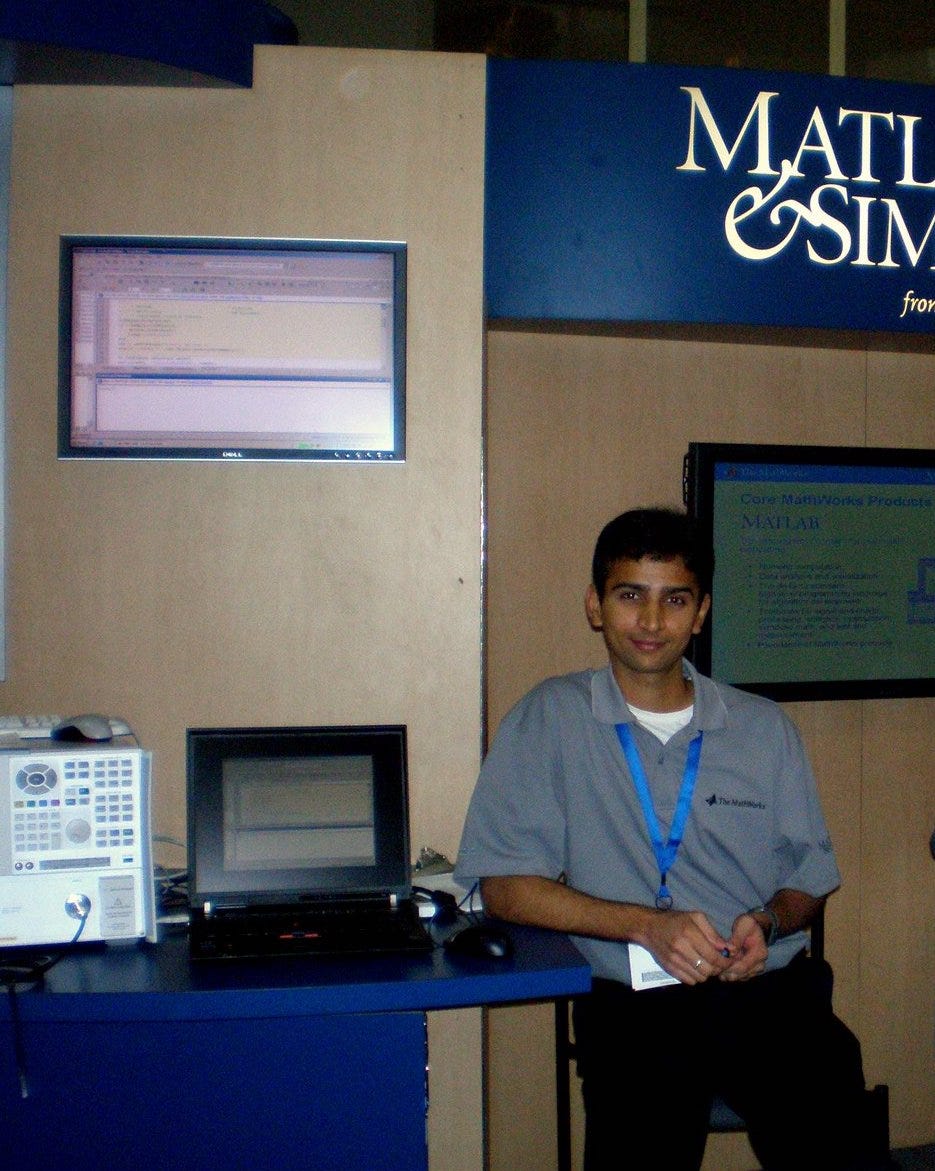
In my second semester at school, I landed a co-op at, what I considered, my dream company — MathWorks. I had used MathWorks tools like MATLAB, Simulink and Stateflow throughout my coursework and labs during my graduate program, and loved how they opened up the world of scientific computation and analysis.
I doubt anyone at MathWorks ever knew how much this job offer meant to me. I needed a paid co-op to start repaying student loans.
With my second semester done, In the early summer of 2007, I moved from Ann Arbor, Michigan to Natick, Massachusetts — a suburb of Boston, to start out as an co-op at MathWorks. I was able to do this thanks to Curricular Practical Training, CPT for short (Similar to Optional Practical Training — OPT which is available after you graduate).
I had the role of an “Application Support Engineer”, working with MathWorks customers via phone / email, helping them solve complex problems and debug issues as they used MathWorks tools to build complex visualization tools, software for embedded systems, complex simulations etc.
Why was an “Electrical Engineering” graduate student doing tech support? Because:
I saw it as a way to connect with some amazing scientists and engineers, and getting a glimpse of the amazing things they were bringing to life
It was a way for me to get my foot in the door to a company I admired
The tools I was using, and helping customers use, were directly relevant to my coursework at school.
I didn’t know it at the time, but in hindsight, starting out in technical support was one of the best things for my career. It taught me to look at problems and software in a way that was very user-centered, building empathy for our customers.
3 months into my 6 month co-op, I got a full-time job offer starting in January 2008. With just 1 credit left to graduate, I took an online course at the University of Illinois at Urbana-Champaign over the fall of 2007 while I was still in Boston at my co-op, and transferred the credits back to Michigan to graduate in December 2007.
The timing of it all was sheer luck. I qualified to apply for the H-1B visa for 2008, and was lucky to get the visa in my first try. (My understanding is that most international graduate students follow the path of CPT -> OPT -> H-1B).
And then… the recession hit.
Wading Through the Recession
I had made it into MathWorks just in time. There was a hiring freeze that lasted close to 2 years, and if I had graduated a semester later, I likely would not have had the same job offer waiting for me.
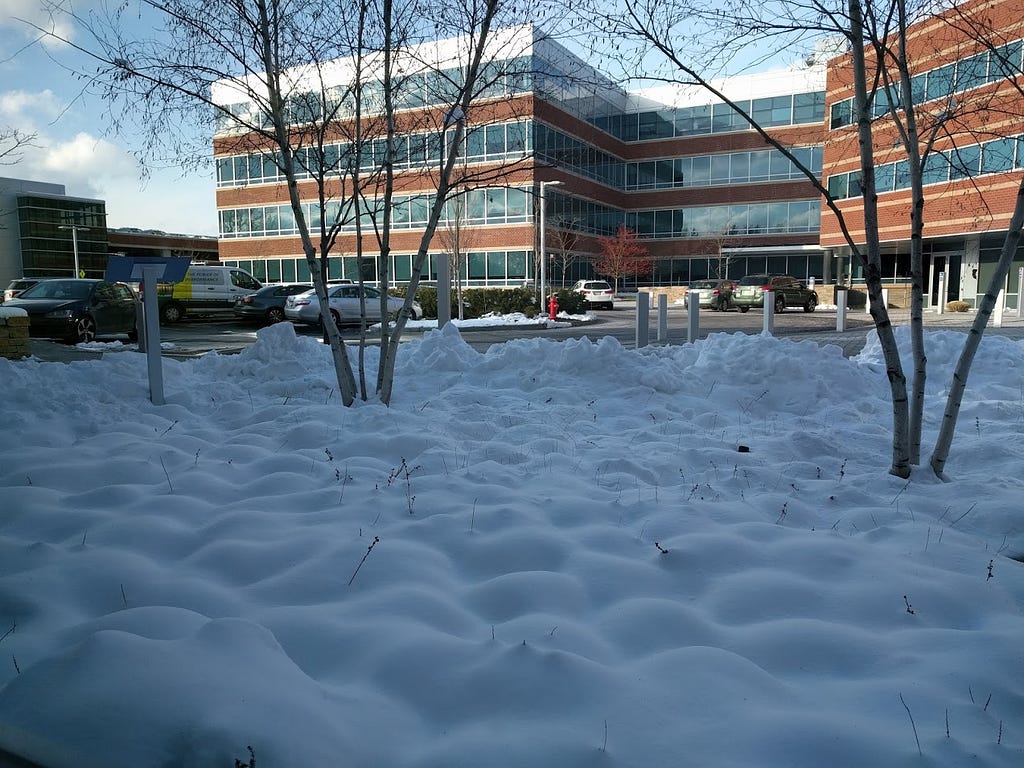
I also got married in 2008, and my wife (also an engineer by profession) left her job in India and arrived back with me to Boston. She was on a H4 visa, incredibly restrictive at the time, but we knew what we were getting into.
She tried to search for a job, and for a year the calls would come, but prospective employers would suddenly disappear when they found out they’d need to sponsor a visa. In the midst of a recession, it’s understandably hard for small and mid-sized businesses to afford hiring people who need H1B visas. The cost of the process, especially with attorneys involved, is expensive.
With the economic recovery in the US struggling to take hold, things weren’t looking like they’d pick up soon. She had always wanted to go to grad school and get an MBA, so she began her pursuit to get into grad school.
The Road to Permanent Residence
A little more than two years into my role in Technical Support, and after a few internal projects with other teams within the company, I switched to being a Software Engineer full time. This was in 2010. I began my career working on an amazing software product called Stateflow.
Towards the end of 2011, my employer decided to apply for an employment based green card for me. Since I had a Masters degree and some prior work experience, that put me squarely in the EB2 category of green cards. For those of you who don’t know, EB stands for Employment Based. At some point in the process, once the initial petition is approved, you are given a priority date, which effectively says “get in line”.
The priority date is interesting because USCIS publishes a visa bulletin periodically that informs the public what priority dates are being processed, depending on your nationality and your Green Card petition category. A fun fact about priority dates is that the USCIS status on them can “regress”. What does this mean? USCIS could publish a bulletin saying that they are processing all applications with priority date up to April 2011, and then a few weeks later, they could publish another bulletin that pegs the priority date to June 2006.
It was only at this stage that I started digging into the process some more to understand the different factors at play that might influence the priority date. Research aside, it became evident very soon that the wait for a green card in the EB2 category, for an Indian national like me, was going to take a very long time. How long you ask? 54 years according to a recent estimate:

Living in Immigration Limbo

As I watched the wait times increase, with no end in sight, I remained naively hopeful that a sudden policy change would bring relief. I tried not to think too much about it, and kept doing my best at work.
I worked hard, because (especially) as an engineer on a H-1B, there’s no room to become complacent or sloppy. If you lose your job for any reason, you have 60 days to find an equivalent job, or leave the country.
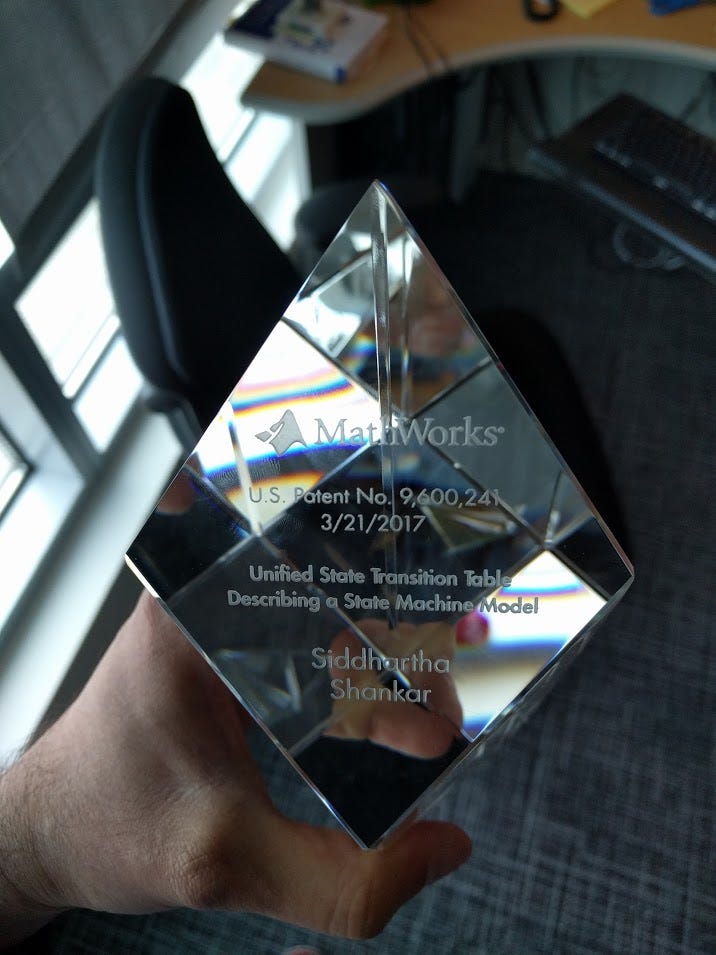
We really wanted our life in the US to work, we wanted to settle down there. I put my head down and gave it my best. Some of that work led to 2 US and 1 international patents.
In 2014, we continued hoping, and we bought a house.
In 2016, my daughter was born. We kept building our professional network and made friends. We thought we were really putting down roots.
Between 2010 and 2018, I kept advancing in my career, becoming a Senior Software Engineer, and then a Software Engineering Team Lead.
As the years went by, the wait times kept increasing.
All this time, I realized how much of a pain the H-1B really was:
Since H-1B visas are valid for 3 year stretches at the most, and with my wife and I both on a H1-B by 2012, every year or two when we traveled out of the country, we’d realize that paperwork for visa renewal would be necessary because one of our visas would have expired. Oh, and it’s generally “discouraged” to apply for a visa renewal anywhere other than your home country.
Say you want to switch careers i.e. you’re a software developer, but you’ve developed a passion for product management, or marketing — you need to tread carefully, particularly if you’re in the Green Card queue. A H-1B transfer isn’t guaranteed, and you may lose your place in the “queue”, having to go through the Green Card process again, because you’re in a new role.
Even if you don’t switch roles, or companies, your H1-B renewal isn’t guaranteed anymore, particularly since Trump took office in 2016.
When returning to the US after a holiday, or a visit to your home country, the CBP (Customs and Border Patrol) officers at airports will look at your stamped visa and be unpleasant jerks. Once, an officer almost denied me entry after a 17 hour flight, because even though I had a valid visa stamped on my passport, I wasn’t carrying my I-797 notice of approval document with me. In the 4 visits back to the US before, no CBP officer had ever asked me for that document. I’ve heard stories of CBP officers asking software engineers questions about programming off wikipedia to verify that the engineer is really a software engineer. 🤦♂
Unfortunately, the H-1B visa is sometimes abused (some Indian IT cos come to mind). Also unfortunately, as a H-1B holder working for a company paying you really well, you will get lumped in with the H-1B abusers and be accused of stealing jobs, working for low wages and displacing American workers.
The Green Card queue has a per-country quota. It’s not fair or unfair. It is what it is, and it’s not great for you if you’re an Indian national. The fact that you’ve contributed major tax dollars into social security and medicare (that you likely won’t ever see a dime of) and have been a law-abiding citizen mean nothing.
The Choice
“In any moment of decision, the best thing you can do is the right thing. The worst thing you can do is nothing.”
― Theodore Roosevelt
A year into the Trump presidency, we thought we had seen enough. After a decade, it seemed like only a fool’s hope to assume that things would get better.
The choice was simple, we either
Stay and face all the issues I’ve mentioned above, or
Exercise the privilege and resources that we have to move somewhere else, where we’ll be free, while still maintaining or improving the quality of life that we had become accustomed to.
Free to travel without being harassed about our visa status.
Free to take on the roles and jobs we’re passionate about, even if it means taking risks in new roles, or at very small companies.
Free of accusations of being a wage undercutting job stealer.
Free of the deluge of immigration paperwork that always seemed to be coming our way, to continue to stay in the US legally.
We chose to leave the US. We chose freedom.
The Promise of A New Life
We had heard about Canada’s Express Entry program, that granted permanent residence to applicants with the right mix of job skills, language ability, and work experience.
It sounded promising in theory, but we wanted to be sure we’d like our potential new home. In the summer of 2017, we visited the city of Toronto in Canada to get a feel for the city.
We picked Toronto because, with the high density of opportunities in the Software and Services industry, we wanted to give ourselves the best chance of landing on our feet in a new country, where we had no relatives, and very few friends or professional connections.

Exploring the city over many days, we enjoyed the energy and diversity we saw, and our minds were made up.
Tasting Freedom 🇨🇦
We kick-started our application for Express Entry in earnest. The process was surprisingly simple and transparent. We didn’t need to hire any immigration attorneys, or consultants. It was all self-serve, although it did require us to be thorough in the documentation that we collected.
The best part was, after being invited to apply for permanent residence, we submitted our application on December 5th 2017, and on December 21st, we had confirmation that we were permanent residents!
Years of waiting in Limbo in the US vs. 16 days. Sixteen DAYS.
Fast-forward to the fall of 2018, and we sold our home in Newton, Massachusetts and permanently moved north, across the border to Canada.
Almost two years later, we feel very well settled in our new life here. The few experiences we’ve already had traveling out of the country and returning back home to Canada as permanent residents have been a joy. There’s so much I want to talk about in our experience of moving to Canada, but I’ll save that for another post.